
Gold prices are struggling and are down 18 per cent from their March highs. But stock prices have fallen even more. As a result, the precious metal has begun to outperform equities - both in the domestic market and international markets. Gold prices are up 2.6 per cent in the domestic market in the current calendar year (CY22) so far, according to the World Gold Council (WGC), compared to a 1.7 per cent decline in the Sensex year-to-date (YTD).

India's gold demand declined 18 per cent to 135.5 tonnes in the first three months of this year, mainly due to a sharp rise in prices, according to the World Gold Council (WGC). The demand stood at 165.8 tonnes in the first three months of 2021. In terms of value, gold demand dropped 12 per cent to Rs 61,550 crore in the January-March period. It stood at Rs 69,720 crore in the year-ago period, the 'Gold Demand Trends Q1 2022' report released by the WGC said.

Those interested in investing in gold have shifted to instruments, such as sovereign gold bonds and gold ETFs. Many others are, in fact, selling gold or using it as collateral to generate short-term liquidity.

Global gold demand hit an 11-year low in 2020 at 3,759.6 tonnes, mainly due to a weak October-December quarter and the COVID-19 related disruptions across the world driving a muted consumer sentiment throughout the year, the World Gold Council (WGC) said in a report. The overall consumer demand during 2019 was at 4,386.4 tonnes, while in 2009 the overall demand was at 3,385.8 tonnes, according the WGC's 2020 Gold Demand Trends report. Global gold demand dropped by 28 per cent year-on-year (YoY) to 783.4 tonnes in the fourth quarter compared to 1,082.9 tonnes during the October-December period of 2019, the report stated.

It rose to 310 tonnes in the second quarter ended June.

The RBI is still a small player in international gold buying among central banks. But in terms of total gold bought in 2019, it is the sixth largest buyer with 25.2 tonnes purchases in the first 10 months of 2019.

Sagoo was the lone candidate left in fray after incumbent senior vice president Anju Bobby George opted out of the race for the position.

The RBI on Wednesday eased gold import norms by allowing select trading houses, in addition to already permitted banks, to procure the precious metal to boost exports.

The rising price of the precious metal has helped the central bank increase overall forex reserves despite currency reserves not rising, and sometimes even falling.

Good monsoon, farm loan waiver -- the two key reasons behind more customers in jewellery shops

Dhanteras' buying seemed to have been sparked by the belief that prices would remain firm

Cricket has been the driving force behind change in the sporting ecosystem in India but women's participation in other sports in the country still needs more support and platforms for exposure.

Gold looks cheap compared to the stock markets that are highly overbought at the moment.

India's annual gold consumption is about 800-900 tonnes, of which about 750 tonnes is imported. However, in 3-5 years, domestic refineries would meet the whole demand, reports Rajesh Bayani.

In 2012, Q4, the country's demand for the yellow metal during stood at 260.3 tonnes and for the entire year it was 863 tonnes.

Demand bounces back but uncertainty over GST rate for jewellery casts a shadow over future.
In the second half of April, the discount on gold came down to $3 an ounce.

Forecasts of a further rise in bullion prices keep Indians away from selling gold.
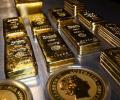
The Reserve Bank of India (RBI) has increased its gold purchases, as part of its foreign exchange (forex) reserves. In the first half (H1) of calendar year 2021 (CY21), the addition of gold to India's forex reserves has been the highest - on a half-yearly basis -at 29 tonnes. Now, the RBI's gold holding - as a proportion of its forex reserves - has for the first time crossed 700 tonnes.

India's gold import bill, estimated at $3 billion in May, is seen falling further this month

Custom authorities have been keeping strict vigil on the cargo movements from Bhutan, Taiwan, China, Afghanistan, South Korea Japan, and Dubai since January.

India's gold demand recovered during the January-March period to witness a growth of 37 per cent at 140 tonne compared to the same quarter of 2020, due to ease of COVID-related restrictions, pent up demand and softening of prices of the yellow metal, according to the World Gold Council (WGC). The overall gold demand stood at 102 tonne during the first quarter of 2020, as per WGC data. Gold demand in value terms increased by 57 per cent during the first quarter of this calendar year to Rs 58,800 crore compared to Rs 37,580 crore in the corresponding period of 2020.

In April and May, there were additions by RBI of 600 kg and 900 kg. RBI's total gold holding is now 561.9 tonnes.

The government has asked jewellers to provide information on purchases of gold bars or jewellery worth more than Rs 500,000 by the end of this month, a move seen keeping a check on big transactions amid rising smuggling.

Import is returning to the normal prevailing three years ago
Gold hallmarking is a purity certification of the precious metal and is voluntary in nature at present.
Consumers have to watch out for four marks on hallmarked gold jewellery: BIS mark, purity in carat, assay centre's name and jewellers' identification mark.
This is good news for the central government at a time when crude oil prices are rising.

'That combination of a rising economy, a growing middle class, and a deepening love of diamonds and jewellery is what we see really doubling the market for diamonds over the next five years.'
India's gold demand increased by 19.2 per cent to 76.1 tonne during the April-June quarter this year, largely due to low base effect, owing to the nationwide lockdown that hit economic activity last year, the World Gold Council (WGC) said in a report. The overall gold demand during the second quarter of 2020 calendar year stood at 63.8 tonnes, according to the WGC's 'Gold Demand Trends Q2 2021' report. In value terms, India's gold demand witnessed 23 per cent growth during April-June quarter at Rs 32,810 crore, compared to Rs 26,600 crore during the corresponding period of 2020.

Globally, jewellery buying fell 14%, investment slid 11%.

Female athletes will soon have to undergo a one-time genetic test to compete in women's events, World Athletics president Sebastian Coe said on Tuesday, after proposals to tighten eligibility rules were discussed at the body's council.

Gold was Rs 28,100 per 10 gm on July 26, 2014.
The rouble has been falling steadily since early November and collapsed earlier this month following a spectacular decline in the price of crude oil to five-year lows.

The overall gold demand during the second quarter of 2013 stood at 1,148 tonnes, the World Gold Council Q2 Demand Trends report said.

Regaining the lost sheen, sales of gold jewellery and coins are set to touch pre-COVID levels in volume terms on the auspicious Dhanteras as easing pandemic concerns and pent up demand saw consumers flocking to stores to buy the precious metal. Increased footfall at stores and brisk sales online as well as relatively softer gold prices compared to record Rs 57,000 per 10 grams level in August spurred increased buying, especially light weight offerings, on Tuesday. Dhanteras is considered to be auspicious for buying precious metals and other valuable items.

Concern would kick in if imports stay at or over 100 tonnes a month.

Jewellers see flat gold sales this Dhanteras
Gold, which lost its sheen to some extent in the second half of 2021, is likely to regain the glitter in the New Year and cross the Rs 55,000-per-10-grams level amid pandemic woes, inflation worries and stronger US dollar. After a stellar run up in 2020 when the yellow metal touched a record high of Rs 56,200 on the MCX in August, the prices are near Rs 48,000 per 10 grams now. This is roughly 14 per cent lower from the all-time highs and 4 per cent lesser compared to January 2021 levels.

The customs duty from gold imports could be approximately Rs 8,000 crore, about less than half of what was collected a year ago.
